0%
The only place on earth the Asiatic lion still roams wild — and within it, a retreat built on an older idea of hospitality.
The only place on earth the Asiatic lion still roams wild. A mango orchard on the edge of Gir Forest National Park, and within it, a retreat built on an older idea of hospitality — one that replenishes rather than consumes.
Woods at Sasan occupies eight acres on the boundary of Gir Forest National Park — the sole remaining habitat of the wild Asiatic lion. The property grows out of a working mango orchard, its architecture shaped by vernacular material: bela stone, lime plaster, recycled ship-teak, filtered light. More than four hundred trees were preserved during construction; 75.3% of the site remains a living landscape.
The retreat is the flagship of 1000 Island Hotels & Resorts, founded on a model of regenerative hospitality — the conviction that a stay should leave a place, and its community, more alive than it was found. That philosophy governs everything from the zero-cement build to the on-site medicinal forest that feeds the well-being programme directly.
The land came first. The architecture followed.
The term biophilia — popularised by biologist Edward O. Wilson in 1984 — describes something older than any word for it: our urge to affiliate with other forms of life. For most of human evolution, nature was not a backdrop. It was the condition of existence. We are only recently indoors.
At Woods at Sasan, biophilia is not a design principle layered onto a building. It is the starting point. The land came first. The architecture followed, orienting itself around what was already here — orchard, grassland, river, forest edge — and asking only what it needed to shelter, never what it wanted to dominate.
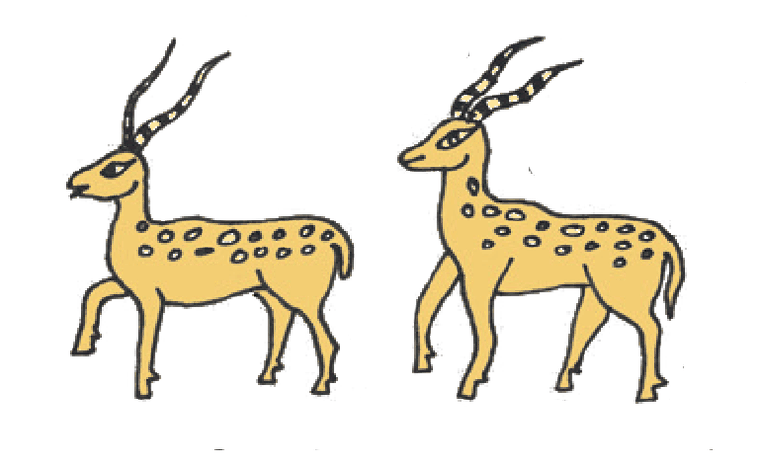
Full-size openings, fewer walls. Morning sun falls directly onto the bed. Guest rooms look out to the mango orchard on one side and the deciduous forest on the other, where a family of deer in the early morning is not unusual.
Decks, outdoor bathing, the unpredicted sway of grasses. Stone walls and lime plaster; furniture in natural wood, cane, khadi, banana fibre. Materials that breathe, that respond to weather and time, as all living things do.
Forest walks with a local naturalist. The Som medicinal garden. Stargazing through the house telescope. A barbecue under the fire pit while crickets provide the score. Countless opportunities to engage with the abundance of this specific place.
Like meandering trails formed by grazing animals, branched walkways connect the guest rooms to the rest of the property. Buildings are placed where the light falls — as a sapling grows — leaving the existing landscape untouched.
Each handcrafted detail narrates the region — its flora, its fauna, its coexistences. Design here is not decoration. It is correspondence between the built space and the living world that surrounds it.
Rainwater, food waste, pruning and soil form a closed loop. Nothing is disposed of; everything is returned. The property does not merely sit within an ecosystem — it participates in one.
Natural terrain slows runoff. Water seeps into soil, raises the water table, is purified and returned to irrigate the orchard through summer.
Kitchen waste and pruned plantation go into the Bioneer composter. The resulting soil returns nutrients to the edible garden within 24 hours.
Native planting, preserved terrain and minimal intervention have created conditions in which over 50 bird species and 20 butterfly species now live on the property.
38 keys across four room categories, set within the mango orchard. All designed without cement; recycled teak throughout; private decks and gardens open to the forest.
Farm-to-table, organic meals across three distinct spaces: Swadesh, Terracotta and the Mango Bar. A 100-mile sourcing radius; food waste halved since 2021; a zero-waste kitchen.
SOM takes its name from the Sanskrit word for the essence of life. It is not a spa. It is a considered path inward — one that works with the body's own prakriti, its elemental nature, to restore the balance that daily living slowly undoes. Three offerings here are found in few places: the Sonorium — one of India's only dedicated sound-healing rooms — works through frequency and resonance rather than touch. Acupuncture and Reiki arrive not as additions to a menu but as complementary medicines with their own lineage, administered by practitioners who understand the difference between a treatment and a conversation with the body.
Two researchers from the property's design team travelled to a Maldhari village in Gir to learn Chundana from its source — sitting with the artisans, observing the hand-poked geometry, understanding the motifs not as pattern but as language. The lotus. The sacred dot. The forms that tribal communities have pressed into skin for centuries as marks of identity and spiritual protection. They returned with that vocabulary and transposed it — from body to wall, from needle to clay — in a Lippan relief installation that now lives in Swadesh. The mud is raised, the mirrors pressed in by hand, and the motifs are those of the Maldhari: unchanged in meaning, moved into a new material. It is one of the few places in the property where two folk traditions from the same landscape meet in a single surface.
Sessions designed fresh each day and displayed at reception. The open-air Yogashaala meets the morning before the orchard fully wakes — a way of arriving, properly, in the body. Open to all guests, all levels.
Gir's distance from city light means the sky here does what skies are meant to do. In-house naturalists set the telescope and guide guests through the constellations, planets and the slow logic of the night.
The in-house vegetable and herb garden is tended by the property's own horticulturist. Guests are welcome to join, to plant, to pluck — to understand the short distance between this soil and that morning's meal.
An in-house pottery wheel and kiln, guided by Nathabhai — Islander, artisan, someone who has been working clay longer than the property has existed. An hour at the wheel is a lesson in patience.
The art of weaving — thread, tension, pattern — taught by Nathabhai, the same Islander who works the pottery. Two crafts, one pair of hands that have spent a lifetime understanding what materials know.
A house of books. A social experiment in accessible knowledge: reading libraries placed throughout the resort and across 13 villages of Sasan. Over 2,000 donated titles, handcrafted wooden shelves, and the conviction that information belongs to everyone.
A documentary on the ecosystem, the species, the relationships that hold the forest together — a considered way to understand what a guest will step into the following morning, and what they are already surrounded by.
A fully equipped gym and swimming pool. For those whose mornings require movement before stillness — or after it.
Pool table, carom and paddle badminton, set alongside the Mango Bar. The unhurried afternoon, extended by a game that needs no explanation and no booking.
Pustak Ghar is a social experiment in accessible knowledge — reading libraries placed not only throughout the resort, but across thirteen villages of Sasan. Handcrafted wooden shelves, shaped like small houses, hold over two thousand donated titles, open to anyone who passes.
The conviction is simple: information belongs to everyone, and a book left within reach of a child in a village does quiet, compounding work. The shelf is the gesture; the reading is the point.
A slow meal celebrating local kitchens, craft and stories. Guided by the culinary team, Swadesh arrives with live folk music and the unhurried logic of a regional thali.
A private evening of slow-cooked flavours and open fire, set in the mango orchard. Unhurried, intimate — the kind of meal that becomes the memory of a stay.
A rustic half-day at Chitrod Farm — a living kitchen garden. Local flavours, traditional cooking, and the provenance of every dish visible before it reaches the table.
A mindful dining ritual rooted in yogic and Ayurvedic principles, where food is prepared and received as medicine. Nourishment understood from the inside.
A dinner taken in deliberate silence beneath the trees — attention turned fully to flavour, to the forest's own sound, and to the company of being present without speech.
An early-morning forest drive leading to a sunrise breakfast served on the bonnet of a Gypsy. The forest is quietest here; the light at its most particular.
A serene hilltop experience with light refreshments, panoramic views and a golden sunset. The Saurashtra landscape holds a particular quality at this hour.
A guided walk through forest paths near the retreat, inviting guests to slow down. Led by naturalists who know the land by its sounds as much as its sightlines.
A mini-safari by car through teak forests, mango orchards and river stretches — arriving at a quiet stop for tea as the evening temperature drops and the forest shifts register.
A guided Gypsy experience through Gir's diverse habitats — home to over 300 bird species. Around 16% of Gir's entire bird diversity has been recorded on this estate alone.
A leisurely cycling trail along forest edges, village paths, bedrock terrain and the Hiran River — a route that earns its tea stop and leaves the legs and mind equally settled.
An intimate sound healing experience guided by the five elements, using resonant instruments tuned to the body's own frequencies. One of India's only dedicated sound-healing rooms.
A personalized acupuncture session rooted in TCM, using pulse and tongue diagnosis. One of Gir's only practitioner-led alternative medicine offerings.
A guided spiritual journey to Somnath — one of Hinduism's most sacred sites and the first of the twelve Jyotirlinga. The temple faces the Arabian Sea; the visit arrives with its own quietude.
A spiritually immersive full-day journey through Gir's forest routes, combining a jungle safari with visits to Kankai temple and the Banej waterfall — sacred sites held within the living forest.
A slow-paced exploration of local village life — meeting artisans, farmers and families whose rootedness in this land precedes the retreat by generations. Fellowship, not tourism.
A journey into the layered history of Junagadh — its Nawabi past, Girnar's pilgrim trails and the stories held in its old quarters. A day spent reading a city through its memory.
The monsoon gives Jamzir a sound the dry months don't know — water finding its old channels again. A half-day given to the falls and the walk that reaches them, closing with lunch at Jamzir Retreat before the return by three.
Departure at nine, the coast by mid-morning: darshan at the temple where the Arabian Sea keeps its own counsel, lunch at Sagar Darshan, and two further stops — Bhalka Tirath and Trivedi Sangham — held less for their fame than for what they've witnessed.
A walk with no destination beyond the walking itself, paced slow enough to notice the forest at Khokhai the way it noticed you first. The path closes at a small Hanuman temple, kept quietly among the trees.
Tea brewed the way the Maldhari have always brewed it, taken alongside local snacks in the company of a community whose tenure on this land predates the park that now surrounds it.
A meditation held beneath a single tree, chosen for the particular quality of light and quiet it keeps. Stillness, practised where the forest already practises it.
A day spent working the land rather than observing it — planting, a talk with the estate's naturalists, a walk given to whatever is blooming or nesting that week, and a lunch drawn from what the farm is already growing.
Culture here is not performed for guests — it is simply present. In the ceiling above dinner, in an evening stroll, in the hands of a potter, in a dance that arrived on another continent's shores three hundred years ago.
The star-shaped ceiling in Swadesh — its geometry drawn from the lotus — was handcrafted by Madhuram, an artisan from Borvav village. The craft: hundreds of nails placed with millimetric precision, then thread looped and tightened until the pattern acquires depth and shadow. Sureshbhai, also of Borvav, continues the lineage in works drawn from mythology and sacred forms. No shortcuts; no mass production. Only the patience of hands that have done this ten thousand times.
Clay is one of the oldest conversations between human hands and the earth beneath them. Nathabhai's pottery carries the grammar of this landscape — its colour, its weight, its quality of having been made close to where it is used. Guests who find a vessel at the table or a form in a corner of the room are in the presence of that conversation.
The bulbul tara — a folk string instrument of this region — produces a sound that belongs precisely here: in evening air, beside the orchard, at the hour when the forest changes register. Rajubhai plays both flute and bulbul tara. His music does not accompany the property; it completes it. When he plays, the distinction between the built and the wild dissolves briefly, which is the whole point of being in Gir.
Each evening, Kaki — the most senior member of the Woods at Sasan team — takes a stroll through the property. She stops to ask guests about their day, their safari, what they ate. At Terracotta she arrives with a pickle trolley: seasonal specialties and the unhurried authority of someone who has been here since the first day the doors opened. Her knowledge of Sasan is not trained — it is lived.
Three hundred years ago, the ancestors of the Siddi community were brought to Gujarat by Portuguese trade routes and presented to the Nawab of Junagadh. What they carried — their faith, their percussion, their movement — has never stopped. The Dhamal, also known as Mashira, arrives as prayer and dance simultaneously: a spiritual offering to the Siddi saint, rooted in African devotional tradition and shaped by three centuries of life in this forest.
The Maldharis have lived alongside the Asiatic lion for generations. Their settlements — the ness — are not separate from the forest; they are part of its rhythm. Their practice: take only what is needed, adapt to seasonal movement, respect the boundaries of the wild. Not a sustainability principle — an inheritance. Gir is protected not only by policy, but by people who have always known how to belong within it.
The Michelin Guide selects on one criterion: that a place is worth the journey. Woods at Sasan has been listed among the hotels of India. The Guide expanded to India without a star system for hotels — stars belong to restaurants. For hotels, inclusion in the Guide is the recognition itself. To be listed is to have been found, evaluated and judged worth recommending by the world's most exacting hospitality authority. The list is short. Woods at Sasan is on it. The forest agrees.
A low-impact creative retreat across twenty acres near Jawai Bandh — an ecologically rich landscape of lava hills, caves and tribal communities living alongside wildlife. The regenerative model, carried into leopard country.
A serviced eco-lux residential food forest: eleven essentialist forest homes in Gir, designed for slow living and holistic well-being inside a conservation landscape. Ownership of the philosophy, not just a stay within it.
- Maulik Bhagat, Founder.
We work with a small number of trade partners who understand that the journey is the product. Rate sheets, FAM visits, wedding & event enquiries and collateral on request.